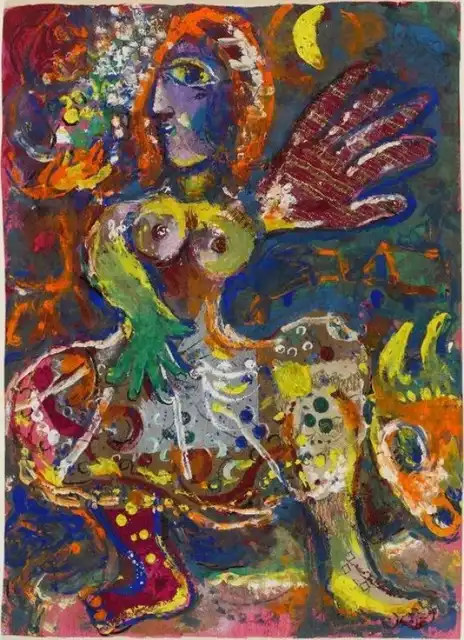


Paris – Centre Pompidou: Chagall á l’œvre – Dessins, Ceramics & Sculptures 1945 – 1970: 4 Oct’23-26 Feb’24

Who doesn’t love a cheeky weekend in ‘gay Paris’? After your Bateau Mouche tour on the Seine, go for lunch in the 4th arrondissement, where you find Les Halles and the Centre Pompidou.

Little restaurants and eateries line the pavements here and this world famous art space just sets the scene perfectly. The original building was ground-breaking at the time, and still hasn’t lost its charm after all these years! A bientôt…

Centre Pompidou in Paris

Centre Pompidou in Paris is famed for its vast collection of modern art collections from the 20th and 21st centuries. Within the centre you will find the Bibliothèque publique d’information (a huge public library), the Musée National d’Art Moderne, and IRCAM, a centre for music and acoustic research. The building itself is not recognised as your typical Parisian architecture, in fact the building was quite ground-breaking for its time and is a sight to behold, with its escalators to the exterior and large coloured tubing and the much-loved addition of a panoramic view of Paris from the 6th floor.

Designed by Renzo Piano and Richard Rogers, the architecture is just the start of what Centre Pompidou has to offer. Home to the National Museum of Modern Art, works from iconic artists are displayed here. Including from the likes of Matisse, Picasso, Andy Warhol, Niki de Saint Phalle. Alongside their permanent collections, the exhibitions they host throughout the calendar year are internationally renowned, adored by visitors from around the world.

Currently, in celebration of the reopening of Centre Pompidou and the wide range of exhibitions now open to the public, visitors can marvel at the current exhibitions and permanent collections with the unlimited ticket ‘Destination Pompidou’ allowing you unlimited access to the museum until September 30th 2021.

The history of the Centre Pompidou

Named after Georges Pompidou, President of France from 1969 to 1974, who commissioned the building, with its official opening hosted by President Valéry Giscard d’Estaing in January 1977. Based in the Beauborg area near Les Halles (excellent shopping) and rue Montorgueil in the 4th arrondissement of Pairs. This centre of art and culture soon became popular with Parisians and tourists alike, welcoming 180 million visitors since its doors were opened.

Through a process of planning throughout the 60s, the idea of the centre was born due to a demand for both a free public library and a wish to renew the idea of Paris as a leading city of art and culture. During the planning process it was also decided the IRCAM would live within the structure. The build was then left to architects, Rogers and Piano, to take on the project.

The design certainly caused some reaction, a bit like marmite, you either love it or hate it! Many people were in awe of the design which the architects decided to design the building to resemble that of a beating heart.

Once opened, the new institution for art and culture in Paris found huge success, quickly becoming one of the five most-visited monuments in Paris. Which, in a vast city full of historic attractions, is certainly an achievement.

Exhibitions at Centre Pompidou

With a wide range of exhibitions hosted throughout the calendar year, here is a snippet of what is currently on offer and what is to come and what we would love to see here at TA-DAH!

Current:

Tribute to Georges Rouault Holy Anger – 9 July – 3 October 2021
Petits papiers du 20e siècle Destribats donation – 19 May 2021 – 31 Jan 2022

Coming soon:

Georgia O’Keeffe – 8 September – 6 December 2021
L’image et son double – 15 September – 13 December 2021
Saul Steinberg, entre les lignes – 29 September 2021 – 28 February 2022

Centre Pompidou centres in Europe

Centre Pompidou, Metz

A sister institution of Centre Pompidou, Metz has its own programme, whilst utilising the notoriety and network of its larger sister to draw in popular collections and visitors.

Based in Metz, capital of Lorraine, region in France, the space has been created to offer visitors a unique experience, allowing them the chance to discover artistic creation in numerous forms, with additional events also taking place year-round. Proven popular since its build, Centre Pompidou Metz has become one of the most visited cultural venues in France outside Paris.

Centre Pompidou, Málaga

In the El Cubo building, in front of the beautiful Bay of Málaga, Centre Pompidou Málaga resides as a modern landmark. One of the first centres the Parisian institution has opened outside of France, offering the public a chance to experience the collection of Centre Pompidou.

With Málaga as the birthplace of Picasso and a hugely popular European destination, there is no better place across Spanish territory for this world-famous institution to welcome visitors and tourists alike.

Satellite Museum Plans

New Jersey – With a prospected opening date for early 2024, a new museum aligned with Centre Pompidou, based in New Jersey will open for visitors as a major attraction. The plan outlines to serve the area with a “multidisciplinary art laboratory” for cultural and educational programmes, using the wide range of works as part of the Pompidou’s modern and contemporary art collection.

Asia – A collaboration is already in place already with the West Bund Museum in Shanghai, so curators at Centre Pompidou hope to branch out further across Asia. With plans to open a satellite space within South Korea, plans came to a halt because of the COVID-19 pandemic. Hopefully, things will start to progress again when we all return to business as usual.

South America – There have been rumours circulating that a potential pop-up satellite museum could soon be appearing in Brazil, but no details of when or if this project will come off the ground have been confirmed.

Vienna – join us at the most beautiful Christmas markets from 15 Nov – 23 Dec 2025

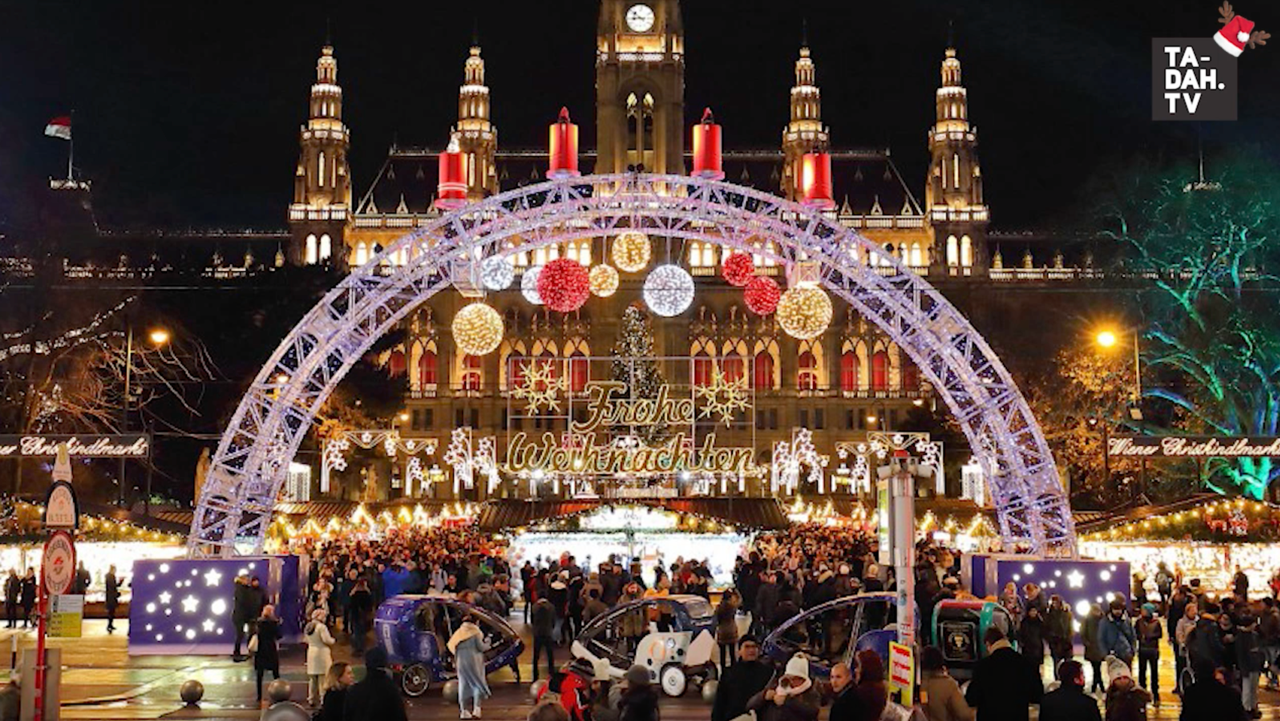
Ohhh, the fun you can have in Vienna during Christmas! Being one of the most fabulous city-break destinations, Vienna goes all out during Xmas with a whole variety of Xmas markets. The biggest is, no doubt, the Wiener Weihnachtstraum am Rathaus, which we simply couldn’t get enough of. The light arch, that welcomes visitors, is iconic by now, so you know, once your’e through, you’ll have a marvellous time: local food stands tempt you to Wiener Würstl, Bratkartoffeln (roast potatoes) and Krapfn (local doughy sweet), whilst fresh mulled wine flows by the gallon. Food aside, there’s plenty of handicraft art & baubles for the Christmas tree at home, so you’re sorted then!

The Bussiplatz, a famous square nearby, is just the cutest square during the festive season. Bussi is dialect for a kiss, so you can imagine, how many couple fell in love there…it represents the local charm perfectly, as kissing is a big part of their Hello’s here.

The Weihnachts- und Kulturmarkt by the Schönbrunn Palace enjoys the most beautiful backdrop possible! Very dreamy and historic, this palace welcomes a more adult public, with a more cultural orientated crowd. The queues to get in can be long, so be prepared…

One of our absolute favourite markets is the Bio-Adventmarkt! Really innovative and great fun for the kids, you’ll find tonnes of handicraft stands there. Again, a gazillion food stands (what makes us think that the Viennese take their food so seriously?), so you can keep warm easily. The carousels make all kids happy, but we love the fact that not only is it eco-friendly, much of the cottage industry’s and home-made artefacts are on display here and you can have fun like a local here.

The Prater was the last on our list of Vienna’s top markets. So, if you’re into amusement park on a giant scale, with a hefty yuletide flavour, then this is for you. Many say, you cannot leave the city without having been to the Prater and had a ride on the giant ferried wheel, but as a matter of fact, there are many fairground attractions here to tire out the kids, so be prepared!

The best of all is, that all is that all these markets are FREE! So, take the family for maximum impact or just enjoy them as a couple in one of the most romantic hotspots in Europe. Whatever you do, and whenever you go, you’re guaranteed a great night out, that’s for sure

London – The Perfect Crime: an immersive theatre, game-like experience

You’ve got 60 minutes to carry out the perfect crime: steal the most expensive painting in the world! Think laser matrix, cracking security codes, tricking high tech locks, disabling alarms and dodging security guards – very Ocean’s 11…or indeed Pierce Brosnan’s Thomas Crown Affair. Either which way, your imagination will be more than stretched. So, gamers listen-up: this should be right up your street. Blagging our way through the process, our presenter Claudia Peifer, pretended to be a replacement cleaner on an extra shift, tried to be a gymnast and faked being a security guard herself.

It is an incredible labyrinth of never ending challenges, starting in a storage cupboard. From there, you’re expected to master a proper obstacle course until you might (or might not) get your hands on the loot, trying to beat the system undetected. The Perfect Crime is the latest theatrical adventure created by the guys behind Heist and The Crystal Maze’s Live Experience. It’s interactive nature brings out the best (or the worst) in you and is a fantastic exercise for team building and sticking it out until the end #mustgo (theperfectcrime.co.uk)

The Perfect Crime – The Story

Back in 1990, the Isabella Gardner Museum in Boston suffered a major theft: 2 of the most valuable paintings were stolen, one being The Storm on the Sea of Galilee by Rembrandt, and other was The Concert by Vermeer. With the FBI offering a reward of $1 Million, no information has come forward so far to this day. The amazing thing is, that on the Black Market, their estimated worth is around $100 Million, so the perfect heist to get your hands on one of those paintings would indeed be a worth your while. Forget even thinking about claiming the rewards money – that wouldn’t be ‘playing the game’.

The plot spins around breaking into the storage of a veteran thief, based in London. The bar is the meeting point at the hideaway, and Baroque (your host) will explain the start point to you and what awaits thereafter. You’ll be equipped with a walkie-talkie, and your mate on the outside is your only link to guide you to the next steps. You are utterly dependant on him, as he is also able to see the monitors that follow the movements of the security guards. Other than that, you’re on your own…or at least you need to rely on your team members, if you’re in a gang.

Rogue Productions

Rogue Productions is a theatre company that created interactive games and theatrical experiences. Their audiences are expected to participate in whatever plot they’ve set on solving or action to be carried out. What you can be sure of is, that every show is an adventure, testing the punter to the core. They want their visitors to be part of the story, challenging their character and imagination, using the power of play and immersion to turn the audience into heroes, or Rogues, themselves. Apart fromf their public events, they are award winning creators of independent work as well, taking on commissions and for brands and company institutions – interesting stuff.

The Director – The Producer

DEAN RODGERS, the show’s director, is an absolute pioneer of immersive entertainment. His experience is extensive, having been the co-creator and co-director of the famous immersive experience called Heist, and the game & experience designer of Time Run: The Lance of Longinus, which is widely regarded as one of the best escape games in Europe. He’s also the co-founder of The Crystal Maze: Live Experience, and explains what The Perfect Crime is all about for the punter ahead of our experience on film.

ORAN DOYLE, the show’s producer, has many years of experience on jobs spanning the UK, Europe and America. His projects include works for the Historic Royal Palaces and productions like Les Enfants Terribles. He is also the creative director at Third Folly, a multidisciplinary arts company, creating works and events for heritage spaces. As a visiting lecturer at the Royal Central School of Speech and Drama, he is also active in training young actors and other emerging talent.

London – V&A: Fabergé in London: Romance to Revolution

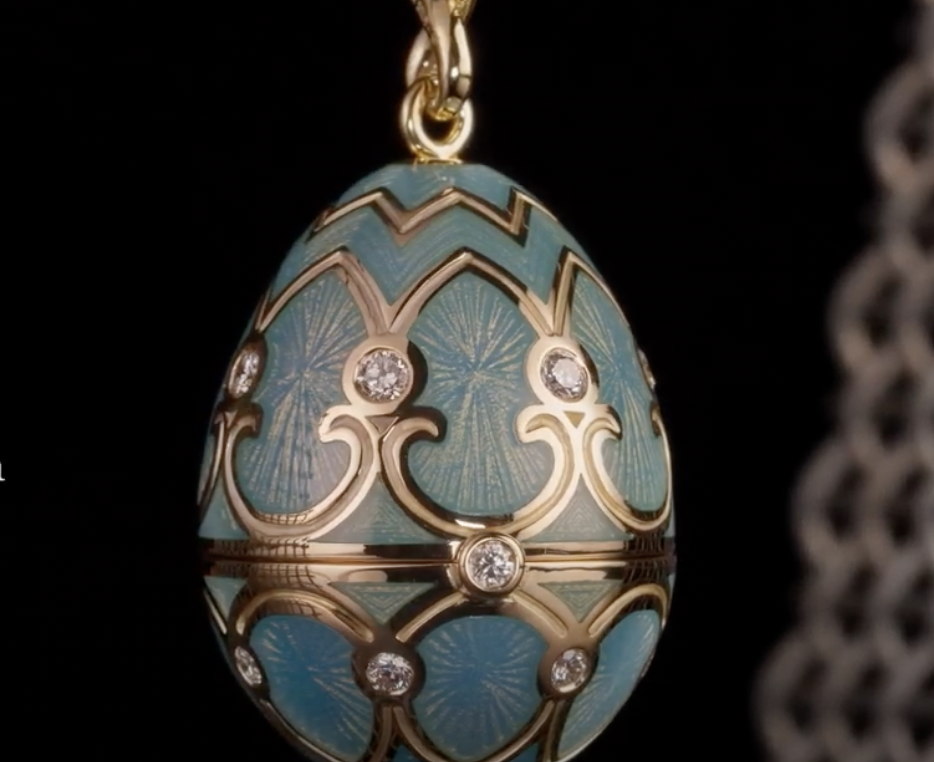
If we could live in the V&A, we would, and frankly with this incredible exhibition coming up, who wouldn’t want to be surrounded by all this opulent glory of the past! It seemingly all started with a scrap metal dealer stumbling across an original Fabergé egg, and things developed from there. The landmark exhibition ‘ Fabergé in London: Romance to Revolution’ brings together around 200 pieces, of which some have been reunited for the first time in over 100 years – big stuff, right? However, his journey and his time in London is also pieced together by this blockbuster of a show, so delving into the past has never been prettier. So, how come he chose London then?

Huge success at the 1900 Paris Exposition made it clear that Fabergé would have a keen customer base outside Russia, should he expand. Fabergé’s choice of London for its new premises was partly because it was the financial capital of the world, a luxury retail destination able to draw a wealthy and international clientele. It was also the home of Edward VII and Queen Alexandra who were already avid Fabergé collectors, making royal patronage in London highly likely. A transitional section in the exhibition transports visitors from Russia to a bustling London and highlight the strong links between the British and Russian Royal Families. Royal photography in Fabergé frames, and gifts presented by Emperor Nicholas II and Empress Alexandra Feodorovna to their British relatives are shown, including a notebook given by Tsar and Tsarina to Queen Victoria for Christmas in 1896.

All this and more is being revealed at the exhibition, so do make your way down there – you’ve got until 8 May 2022! Enjoy…

Fabergé in London: Romance to Revolution is the first major exhibition devoted to the international prominence of the legendary Russian goldsmith, Carl Fabergé, and the importance of his little-known London branch. With a focus on Fabergé’s Edwardian high society clientele, the exhibition shines a light on his triumphs in Britain as well as a global fascination with the joyful opulence of his creations. The largest collection of the legendary Imperial Easter Eggs in a generation are on display together as part of the exhibition’s dramatic finale, several of which are being shown in the UK for the first time. Showcasing over 200 objects across three main sections, the exhibition tells the story of Carl Fabergé, the man, and his internationally recognised firm that symbolised Russian craftsmanship and elegance – an association further strengthened by its connection to the romance, glamour and tragedy of the Russian Imperial family.

Unknown to many, the exhibition explores the Anglo-Russian nature of his enterprise with his only branch outside of Russia opening in London in 1903. Royalty, aristocrats, American heiresses, exiled Russian Grand Dukes, Maharajas, financiers with newly-made fortunes, and socialites flocked there to buy gifts of unparalleled luxury for each other. Fabergé works were as popular in Britain as they were in Russia. The first section of the exhibition highlights the important patronage of the Romanov family. A miniature of the Imperial Regalia, lent by the Hermitage Museum, made for the 1900 Paris Exposition Universelle will capture Carl Fabergé’s role as official goldsmith to the Imperial family. Its members often gave each other intimate Fabergé gifts, and this will be explored through bespoke, ornate objects including flowers made from rock crystal, gold and rose-cut diamonds and exquisite family portrait miniatures. This section also touches upon Carl Fabergé’s youth, his travels throughout Europe, and entry into the family firm.

Next, this section explores the mastery of techniques and intricate detailing that became synonymous with Carl Fabergé and his firm. Creating a culture of creativity throughout his workshops, Carl Fabergé’s restless imagination inspired daring material choices and designs, while the integration of designers, craftsmen, and retailers under one roof galvanised creative collaboration. The dazzling beauty of Fabergé’s work is shown by a sparkling aquamarine and diamond tiara – a token of love from Frederick Francis IV, Grand Duke of Mecklenburg-Schwerin to his bride Princess Alexandra of Hanover and Cumberland on their wedding day. The only known example of solid gold tea service crafted by Fabergé is also on display, one of the most magnificent items to emerge from the firm’s Moscow branch. The nurturing spirit of Fabergé is shown in the work of one of his best-known female designers, Alma Pihl. Some of her most innovative and enduring works are on show including a scintillating ‘ice crystal’ pendant made from rock crystal, diamonds and platinum.

The second section of the exhibition tells the story of Fabergé’s time in London, including how the firm flourished under royal patronage, and how its creations became a social currency for gift giving and ostentatious displays of wealth, amongst the cosmopolitan elite who gathered in the city. Fabergé carefully tailored his works to his British clientele. He created hardstone portraits of the farm animals King Edward and Queen Alexandra bred at Sandringham, their favourite country estate, and objects enamelled in The King’s horse racing colours. Highlight objects include a commission from The King of his faithful wire-haired fox terrier Caesar, a silver model portrait of Persimmon, his most loved and successful racehorse, and one of the firm’s rarest creations – a figurine of a veteran English soldier.

Fabergé became the most exclusive and fashionable place to buy gifts. The King’s mistress, Mrs George Keppel, gifted The King an elegant art-nouveau cigarette case with a snake laid in diamonds biting its tail – a symbol of unbroken and everlasting love. Snuffboxes decorated with topographical views, buildings and monuments were also popular. A nephrite cigar box, set with a sepia enamelled view of the Houses of Parliament, was bought by Grand Duke Michael of Russia on 5 November 1908, the day of Guy Fawkes, and given to King Edward VII. Other highlights include a sumptuous rock crystal vase that was presented to King George V and Queen Mary on the day of their coronation.

The end of the exhibition’s second part moves towards the fateful impact of the Great War and Russian Revolution on Fabergé. With Russia’s entry into the war in 1914, Fabergé’s production suddenly shifted. The workshops focused their output on the war effort and went from creating exquisite objects to producing munitions. Their meticulous craftsmanship switched from jewels and precious metals to copper, brass and steel. In 1917, as the Revolution hit Fabergé’s workshops in Russia, its outpost in London ceased to operate. The final section of the exhibition will celebrate the legacy of Fabergé through the iconic Imperial Easter Eggs with a kaleidoscopic display of 15 of these famous treasures. This is the largest collection on public display for over 25 years.

The collection on display includes several that have never before been shown in the UK including the largest Imperial Egg – the Moscow Kremlin Egg – inspired by the architecture of the Dormition Cathedral, on loan from the Moscow Kremlin Museums. The Alexander Palace Egg, featuring watercolour portraits of the children of Nicholas II and Empress Alexandra – and containing a surprise model of the palace inside – also takes centre stage alongside the Tercentenary Egg, created to celebrate 300 years of the Romanov dynasty, only a few years before the dynasty crumbled. Other eggs that feature include the recently rediscovered Third Imperial Egg of 1887, found by a scrap dealer in 2011 – one of the ‘missing’ eggs created by Fabergé that was lost for many years. The Peacock Egg of 1907-8, shown on public display for the first time in over a decade, containing a surprise of an enamelled gold peacock automaton and Empress Alexandra Feodorovna’s Basket of Flowers Egg, lent by Her Majesty The Queen from the Royal Collection will also be on display. Although Carl Fabergé’s firm ceased to exist, the myth crystallised around the Imperial Easter Eggs and the demand for Fabergé pieces has endured with his designs continuing to inspire, captivate and delight.

Exclusive interview: meet Eric Underwood – actor, model, ex-soloist at Royal Ballet

He is outspoken indeed! Get to know Eric Underwood, as he chats to Claudia Peifer in this frank & honest interview.

Find out how he became the man he is today, via classical ballet and modern dance, straight into modelling, acting, becoming a brand collaborator and now a mentor.

Having started at the American School of Ballet, he danced his way through the ranks to become one of the few black soloists at the Royal Ballet in London – a role he kept for 11years. His overall repertoire includes roles in iconic ballets such as Swanlake (Von Rothbart), La Bayadère (High Brahmin), Manon (Gaoler), Anastasia (Rasputin) and The Nutcracker, amongst many others, as well as creating his own roles in Christopher Wheeldon’s ‘DGV: Danse a Grande Vitesse’ and Wayne McGregor’s ‘Chroma’.

A master of precision and expression, he is a joy to watch performing on stage, and even more inspirational to listen to! He’s danced in the biggest houses across the world, and still has been able to reinvent himself to find new ways to follow his vision in the pursuit of personal fulfilment.

These days, he features in international advertising campaigns, starred in the film ‘Cats’, is seen at the GQ Awards…and yet has massive fun mentoring and teaching school children to dance and to physically express themselves. His attitude to life is nothing short of impressive, so watch this interview and be inspired…

Eric Underwood

Eric Underwood is an American, British ballet dancer. He was one of very few black dancers at The Royal Ballet, during his time there as a soloist between 2006 and 2017. Find out what he is all about in his chat to Claudia Peifer: the self-belief that was instilled in him at a very young age, what drives him to strive and to fulfil his ambitions, and how he has reinvented himself! Read this to get the full picture about his background and thejourney to dancing success!

Eric Underwood’s Journey to the Royal Ballet

Underwood was raised in Maryland, USA. It was not until he was in his teens that he started formal training as a dancer. His mother was eager to send him to a visual and performing arts school in the hopes his horizons would be broadened, but as he entered his audition, stage fright got the better of him. On his exit from the audition, Underwood caught sight of a ballet class in training and asked the teacher if he could try too. He went on to train at the school as a ballet student, being one of very few boys in the class. One year on and he received a scholarship for the School of American Ballet, in the big apple – no less! Here he was the only African American student in his class and graduated there in 2000. From this point he went on to join the Dance Theatre of Harlem and then the American Ballet Theatre in 2003, with himself and Misty Copeland as the only dancers of colour. By 2006 he had caught the attention of the prestigious Royal Ballet in London, when spotted touring in the capital.

The Royal Ballet

Joining as a First Artist, and subsequently promoted to soloist in 2008, Eric Underwood has become a part of The Royal Ballet’s renowned history. Even more so being one of very few black dancers to join the company. The Royal Ballet in London is world famous and a prestigious classical ballet company of the highest calibre. Based at the grand Royal Opera House in London’s Covent Garden, it is the largest of the five major ballet companies in the UK, with a huge reputation, both nationally and internationally. Founded in 1931, it became the resident of the Royal Opera House in 1946 and granted royal charter just ten years later. Since then, it has established itself as the pinnacle of many a ballerina’s career.

In the current day, The Royal Ballet is noted for its artistic and creative values, providing its dancers with world class facilities. The Royal Ballet began its repertoire with the production of The Sleeping Beauty. Since then the repertoire has grown incredibly to include both classic and modern pieces including, CHROMA (which Eric Underwood danced a role he created), Swan Lake, Alice’s Adventures in Wonderland, Anastasia, Romeo and Juliet, and La fille mal gardée.

Famous Male Ballet Dancers

Many a male ballet dancer has used the platform of their dance company to develop their own unique style and to further their career. Some of them have gone on to form their own dance companies, such as Carlos Acosta, a former principal dancer at the Royal Ballet, who also used to dance with the American Ballet Theatre, and is currently the director of the Birmingham Royal Ballet.
Adam Cooper, who shot to stardom in the principal role of Matthew Bourne’s all male Swanlake, is a successful actor, dancer, choreographer and theatre director.

Eric Underwood has also made a move into acting, and working as a successful model is yet another string to his bow. However, mentoring fresh talent is a natural extension to his talents, which he is very excited about for the future.
Other great male dancers in ballet and modern dance:

  • Vaslav Nijinsky
  • Rudolf Nureyev
  • Mikhail Baryshnikov
  • Sergei Polunin
  • Federico Bonelli – Principal Dancer with The Royal Ballet
  • Matthew Ball –Principal Dancer with The Royal Ballet
  • Alexander Campbell – Principal Dancer with The Royal Ballet
  • Cesar Corrales – Principal Dancer with The Royal Ballet

Gilbert & George – The Great Exhibition at Schirn Kunsthalle Frankfurt

It’s been a long time coming, but thanks to a great collaboration between the LUMA Foundation, the Modern Museet Stockholm and the Schirn Kunsthalle in Frankfurt, The Great Exhibition has been showing at the Schirn until the 5th of September’21. This brilliant retrospective, showing works from 1071 – 2019, was a huge success, cementing the international fame of Brit Artists Gilbert & George again as sharp tongued observers of our society, life and history!
This incredible show is of particular interest to our presenter Claudia Peifer, as the first exhibition she ever saw, having set foot on British soil many moons ago, was indeed by Gilbert & George, who at the time were showing at the Hayward Gallery within the Southbank Centre in London. For the two gents to have made it to her home town in 2021 is indeed something she’s thrilled about.
G &G’s works need no introduction, as they represent so many issues of our modern life, that they easily transcend borders and indeed language(s). You’ll need to equip yourself with humour and understanding in order to not be intimidated, either by the subject matter or the size of their works, but provocation & criticism is precisely where the importance of their works lies buried. Open mindedness is an overall requirement, which is why, we think, their work is so timeless, other than being so impressive.
If you couldn’t make it to this blockbuster, watch our round-up now and stay tuned for more information about the next stop of this brilliant show