Austria – Salzburger Festspiele 2026 during July and August


BITESIZE VIEWING ON-DEMAND INTERNET CHANNEL




COMPUTER, TABLET AND MOBILE ONLINE TV
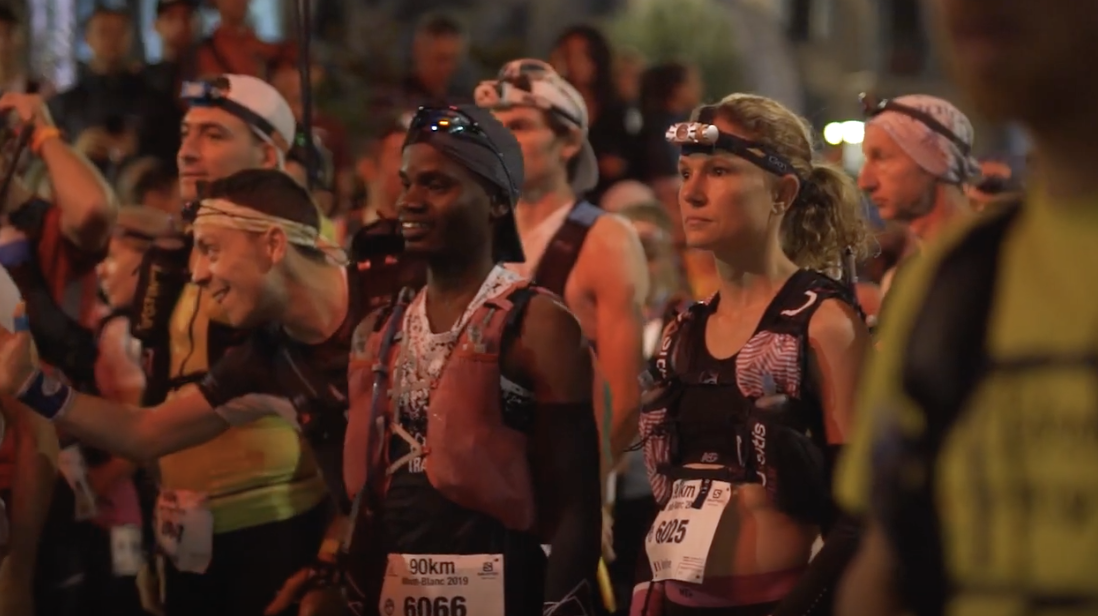
Imagine a race so challenging that it’s nicknamed the “Everest of the Seas” – a solitary journey across the world’s most unforgiving oceans, where sailors pit themselves against nature in the ultimate test of human endurance.
Welcome to the Vendée Globe, a sailing competition that’s part adventure, part extreme sport, and entirely breathtaking.
If you’ve seen our coverage of the Route de Rhum or the Global Kitesurfing Freestyle World Cup, then you’ll know we’re all over everything sailing and water sports-related.
But the Vendée Globe yacht race is something else.
The Vendée Globe is far more than just a yacht race. It’s a legendary maritime challenge that pushes human limits to the extreme.
Single-handed sailors embark on a non-stop journey around the globe, facing some of the most treacherous waters on the planet with nothing but their skill, determination, and a single racing yacht.
Is there a tougher challenge in sailing??
Struggling to comprehend the size of the task facing these intrepid racers? Here are some numbers to help you:
The numbers alone are enough to make most people’s heads spin, but for these incredible sailors, it’s just another day at the office – if your office happens to be the vast, unpredictable ocean.
The story of the Vendée Globe is as dramatic as the race itself. Born from the vision of maritime adventurers, this race has become a legendary test of human capability and oceanic survival.
Founded in 1989 by Philippe Jeantot and named after the Vendée Department in France, the race began with just 13 brave sailors. The first edition was a stark testament to the race’s extreme nature – only 7 of those initial participants completed the journey.
The race quickly became more than a competition. It transformed into a symbol of human resilience, attracting sailors from around the world who dream of conquering the impossible.

When it comes to speed and endurance, the Vendée Globe has seen some truly remarkable performances.
The current speed record is held by French sailor Armel le Cleac’h, who completed the race in an incredible 74 days, 3 hours, and 35 minutes in 2017 – a feat that seems almost superhuman.
The 2020-2021 race was nothing short of extraordinary, marking a significant moment in the Vendée Globe’s rich history.
This edition showcased not just the physical prowess of sailors, but also the growing diversity of the maritime racing world.
The race attracted sailors from nine different countries, each bringing their own unique story and motivation. France dominated the top spots, with a clean sweep of the podium:
Breaking barriers and challenging stereotypes, the race also saw a remarkable increase in female participation.
With six women competing, including Clarisse Crémer, who finished an impressive 12th and set a new world record for women’s solo circumnavigation, the Vendée Globe proved that sailing knows no gender.

Beyond the competitive spirit, the Vendée Globe is a testament to human compassion and solidarity. The race has produced some of the most heartwarming stories of maritime heroism.
One legendary example comes from the 1996/97 race, where British yachtsman Pete Goss risked his own life to rescue French skipper Raphael Dinelli during a hurricane in the desolate Southern Ocean.
For this incredible act of bravery, Goss was awarded France’s highest honor, the Legion d’Honneur – a moment that transcended competition and celebrated our shared humanity.
The Vendée Globe yacht race comes again in 2024/25 and is already generating waves of excitement (pun intended). Starting in November, the maritime world is buzzing with anticipation and speculation about who will emerge victorious.
Veteran sailors and newcomers alike are preparing for what promises to be the most competitive and diverse race yet.
With growing international interest and increasing female participation, the 10th edition is set to write another incredible chapter in this extraordinary maritime saga.

The Vendée Globe is more than a race – it’s a celebration of human potential. It reminds us that with courage, determination, and an indomitable spirit, we can navigate through the most challenging seas life throws our way.
But that’s not the only incredible event we cover here at TA-DAH.TV. If you like the sound of epic feats of athleticism, then you need to check out our Sports Channel.



He throws life experiences, icons of popular culture, fashion, comics, television, advertising, consumerism, urban art, music, graphic design and so much more into a huge pot, gives it a stir, and creates pop art to his very own recipe! Meet Spain’s leading pop artist Javier Melus and find out how he ticks and works, how he gets inspired and how he turns what’s happening in the world around him into art. No limits is definitely his motto, as he combines luxury goods labels with American comic characters on discarded road signs or wooden slats. Anything that catches his attention gets used, leading from one idea into another and then into a concept. No wonder then that he has fans in private clients and collectors all around the world. Watch the video to get inspired yourself and then go to his website for his latest creations to see what might tickle your fancy! (javiermelus.es)
Pop Art is a world-famous modern era style of art adapted by many artists across the world. One Spanish artist making headlines in this style is Javier Melus. TA-DAH.TV caught up with him whilst exhibiting on the Costa del Sol in Andalusia, Spain. Before heading over to the European-wide channel’s Art & Culture section to hear from the man himself, here is everything you need to know about Javier Melus and the crazy world of Pop Art.
Pop Art as a famous art movement, started in the 1950s, and was deemed a revolution against traditional art. It challenged the traditional methods and views of fine art, instead focusing on pop culture and incorporating its imagery into artistic pieces. Flourishing across America and Britain, well-established, household names were born as a result of this exceptional shift in the art world, including the world-famous Warhol, Lichtenstein, David Hockney, and Peter Blake. Often inspired by imagery of the advertising world, consumerism plays a huge part in the pop art movement. Most notably, Andy Warhol’s use of Campbell’s Tomato Soup in his famous 1962 piece. You hear the name Warhol and instantly picture images of the ever-beautiful Marilyn Monroe, depicted using the silk-screening technique. It is not unusual within the pop art movement to spot notable faces of the period, in fact this is a popular choice, with many pop artists focusing on the images of famous singers, actors, and musicians. Despite its roots in the 50s and 60s, Pop Art is still popular today, with modern day artists continuing the movement, with their own styles.
Self-taught Javier Melus discovered his love for art at a young age, venturing outside to paint the world around him. His passion derived from the influences of artists such as Warhol, Basquiat, and Equipo Crónica. Choosing to explore popular culture in his art, you will spot famous cartoon and Disney characters such as Pink Panther and Bart Simpson. With consumerism being the key focus of his art with the incorporation of recognisable designer brands, such as Louis Vuitton. His aim is to reflect the real world into his work, peppered with a pinch of salty humour, while adding his unique touch.
Melus enjoys exploring using different fabrics and textures to stand out from the crowd. Notably utilising wooden slats and discarded road signs as his canvas. Alternatively, to give a 3D effect, he uses Perspex mounted on a board, making the vibrancy of his bold colour choices pop! Javier Melus really is unique, it is not everyday you catch Mickey Mouse with his trousers down! He has even given Mona Lisa the modern-day makeover. For all pop art fans, you can not ignore the talent of Javier Melus, Spain’s leading pop artist, it is so easy to fall in love with his creative work. Visible in many an exhibition, his art can be found across Europe and the rest of the world. Selling both to private clients and collectors, not just in his native Spain, but across the globe. His work has gained a great following of fans and art lovers.
Warhol and Lichtenstein are just a snapshot into Pop Art as an artistic movement. Delving deeper into this artistic revolution you will find Pop Art has various interpretations around the world, developing the movement for global audiences. With France, Spain, Japan, Belgium, and even Russia following in the steps of the American and British artists, the world saw various versions of Pop Art form.
Usually as a result of political or social unrest in countries around the world, which was typical of the 60s and 70s, artists sought to incorporate the challenges of the era into their work. Taking dramatic global events and turning them into art was a common theme. Groups of artists even formed to produce artistic pieces. Equipo Crónica, comprised of Rafael Solbes, Manuel Valdes and Juan Antonio Toledo formed in 1964, is just one example of this. This group in particular were inspired by emphasising the importance of art in society, whilst revolting against the fascist movement at the time. Subsequently the revolution of Pop Art can be considered more than just an artistic movement, but also a great message to society.